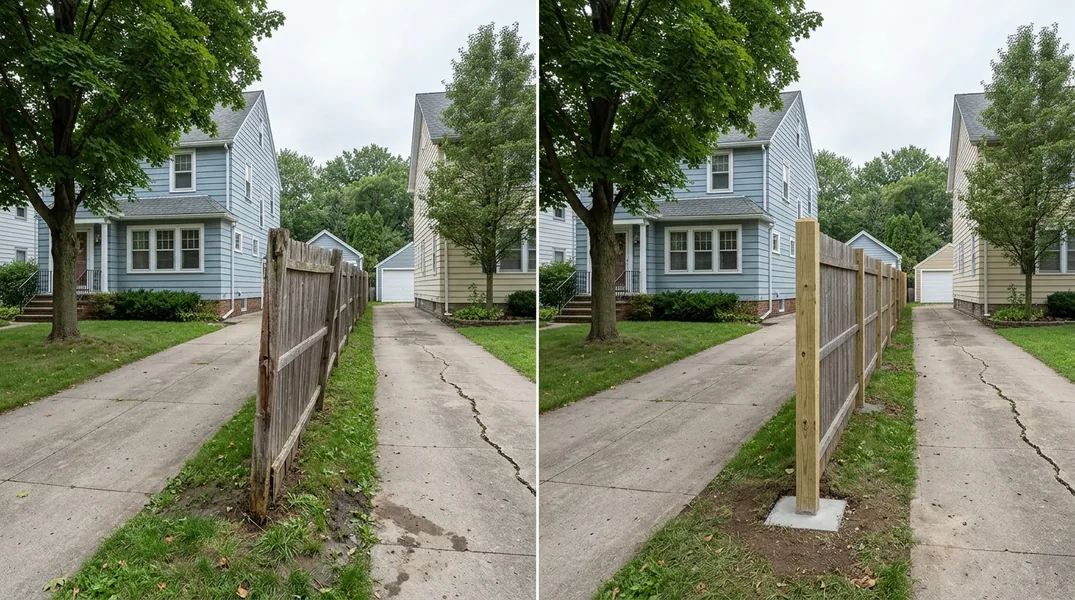
Why Leaning Fences Are So Common in Rochester
If you drive through older neighborhoods in Rochester, you will notice a pattern: wood privacy fences that lean, sag, or wave along the top rail. It is not because homeowners here are careless. It is because the ground beneath the fence is unusually active. Rochester sits on a band of heavy lake-plain clay left behind by glacial activity, and that clay behaves very differently from the sandy or loamy soils homeowners imagine when they think about fence posts.
Clay expands when it absorbs water and shrinks as it dries. In a Rochester winter, the soil goes through repeated freeze-thaw cycles, and each cycle pushes posts slightly upward and sideways. This is the mechanical process behind frost heave fence posts, and it is the single most common reason a fence that looked straight in October looks tilted by March. Understanding this local soil and weather pattern is the first step toward a repair that actually lasts.
Frost Heave, Clay, and Rotted Posts: What Is Actually Happening Underground
Frost heave happens when moisture in the soil freezes and expands. In clay-heavy ground, that expansion is significant, and it can lift a post several inches over a single winter. When the ground thaws, the post does not always settle back into the same position. Over three or four seasons, a post that was set perfectly plumb can end up leaning noticeably. The fence panels above then pull on neighboring posts, which is why one leaning post often becomes a whole leaning section.
At the same time, clay holds water against wood. A pressure-treated post set in clay without proper drainage stays damp for long stretches, and that is exactly the condition that causes rotted fence post repair to become necessary. Once the bottom foot of a post softens, it loses its grip on the ground and the post begins to move. In many Rochester repairs, we find both problems at once: a post that has heaved and a base that has begun to rot. A proper fence post repair has to address both the soil movement and the wood condition, or the fence will lean again within a season or two.
Leaning Fence Repair Near Me: When to Fix and When to Replace
Homeowners in Greece and Irondequoit often ask whether a leaning fence can be saved. The honest answer depends on how much of the structure is still sound. If the rails and pickets are solid and only one or two posts have moved, targeted leaning fence repair is usually the right call. We reset or replace the affected posts, correct the panel alignment, and check the neighboring posts so the repair does not simply shift the problem down the line.
If several posts are soft at the base, or if the fence is more than fifteen years old and the wood is checking and splintering, replacement often costs less over the next decade than repeated repairs. A good rule of thumb: if more than a third of the posts are compromised, plan for a new fence rather than patching. For homeowners who want a long-term solution, our Wood & Privacy Fence Installation team sets posts with deeper footings and proper drainage to reduce frost heave risk from the start. We also install Vinyl & PVC Fence Installation for homeowners who want the privacy look without the rot risk of wood.
The Right Fix for Rochester Soil Conditions
A repair that lasts in Rochester looks different from a repair that lasts in a drier climate. The key is getting below the frost line and managing water. Posts should be set in a footing that extends well below the depth where frost reaches, with gravel at the base so water drains away from the wood rather than pooling against it. In clay soil, we often widen the footing slightly and use a compacted gravel collar to break the capillary pull that keeps clay damp. This is the difference between a post that stays put and one that leans again after the next thaw.
For rotted posts, we remove the compromised wood entirely rather than sistering a new post to a soft one. Partial fixes tend to fail because the old post continues to move and pulls the repair out of alignment. When the existing fence is worth saving, we match the new post to the old profile and stain so the repair blends in. If you are also considering a different fence style, we handle Chain Link Fence Installation and Aluminum & Ornamental Iron Fencing, both of which use metal posts that are unaffected by rot and far more resistant to frost movement than wood.
Fence Post Repair Cost in Rochester: What to Budget
Homeowners researching fence post repair usually want a ballpark before they call. In the Rochester area, a single post reset or replacement typically runs in the low hundreds of dollars when the surrounding fence is sound, and the price rises when the post must be dug out of clay, when concrete must be broken out, or when several posts are repaired together. Replacing a full section, including rails and pickets, costs more because it involves matching materials and rebuilding the panel. Exact figures depend on fence height, material, and access to the post line.
Because every yard is different, we provide a written on-site assessment rather than a phone estimate. That visit confirms whether the issue is frost heave, rot, or both, and it lets us give you a real number instead of a range. You can review our general pricing online, then request a free estimate for your specific fence. If you are in Brighton or anywhere in our service area, call Rochester Fence at (585) 514-4609 and we will schedule a visit.
Preventing the Next Lean: Practical Steps for Rochester Homeowners
Once a fence is repaired, a few habits will help it stay straight. Keep soil graded away from the post line so water does not stand against the wood, and avoid piling mulch or soil up around the base, which holds moisture against the post. Clear snow away from the fence line in winter where practical, since piled snow insulates the ground and can worsen freeze-thaw movement at the base. Check the fence each spring for posts that have started to move and address them early, while the repair is still small.
If you are planning a new fence, insist on footings that account for local frost depth and clay drainage, not a one-size-fits-all installation. That single decision determines whether your fence stays plumb for twenty years or starts leaning after two winters. Rochester Fence builds every project with local soil conditions in mind, and we are happy to walk you through the details before you commit. Reach out for a free estimate or call (585) 514-4609 to talk through your options.
Looking for a professional fence contractor in Rochester? Rochester Fence responds fast for all your fence needs.
Get a Free Quote