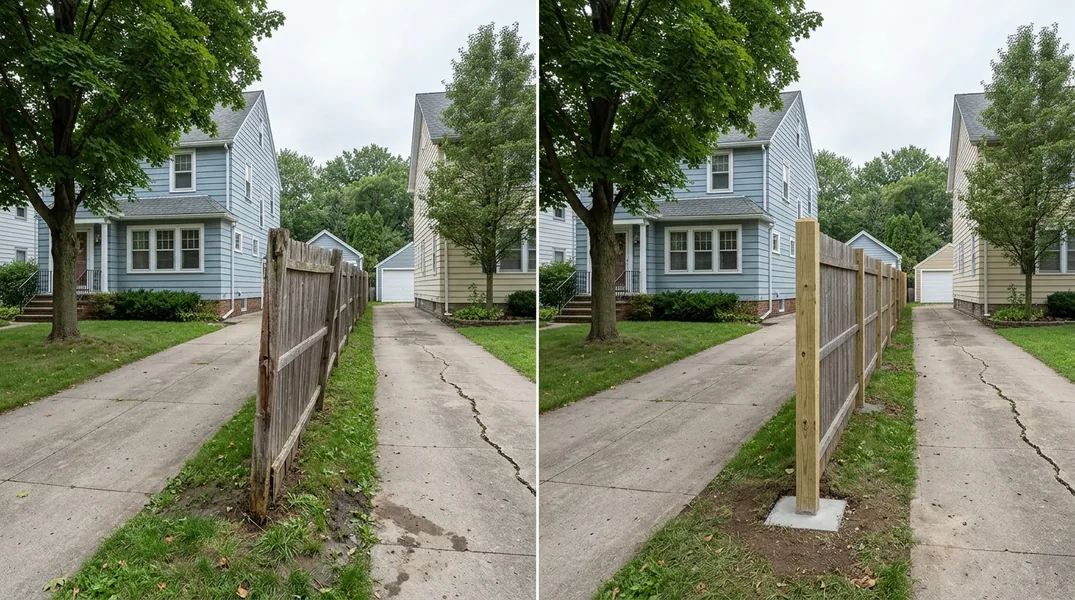
Who Pays for a Fence Between Neighbors in New York? The Short Answer
If you are planning a fence and wondering who pays for a fence between neighbors in New York, the short answer is: there is no state law that automatically forces a neighbor to split the cost. New York follows what is often called the "American rule" for boundary fences. Unless you have a specific agreement, a local ordinance, or a deed restriction that says otherwise, the person who wants the fence generally pays for it. That means if you want a privacy fence around your backyard, the financial responsibility is yours unless your neighbor voluntarily agrees to share.
This surprises many homeowners, especially those who move to Rochester from other states where fence laws are different. Some states have "fence-in" or "fence-out" statutes that allocate costs between adjoining landowners. New York does not have a statewide cost-sharing statute for typical residential fences. However, local rules can vary, and homeowners associations often have their own requirements. Before you assume anything, it is worth understanding the difference between a fence on your own property and a fence on the property line, because that distinction drives both cost and liability.
Fence on Property Line vs. Inside Your Yard: Why It Matters
A fence on the property line is a boundary fence. In New York, when neighbors jointly build and maintain a fence on the line, it can become a shared responsibility by agreement, but it is not automatic. If you build a fence entirely inside your own property, you retain full ownership and control. You also avoid the most common source of neighbor disputes: uncertainty about who owns the fence and who must repair it. For most homeowners, keeping the fence a few inches inside the surveyed line is the cleanest approach, even if it means giving up a small strip of yard.
If you want to place a fence directly on the property line, get a current survey first. Surveys prevent expensive mistakes, especially in older neighborhoods around Greece and Irondequoit where fences and hedges may have crept over the years. A survey also protects you if a future owner disputes the boundary. Once the line is clear, talk with your neighbor in person. A short written agreement that describes the fence style, height, location, and cost split can prevent years of friction. It does not need to be complicated, but it should be signed and kept with your property records.
Good Neighbor Fence: How Cost Sharing Usually Works
The term "good neighbor fence" describes a fence design that looks the same on both sides, often with alternating board patterns so neither neighbor gets the "ugly" side. It also describes the informal practice of neighbors splitting the cost of a boundary fence. In New York, a good neighbor fence is a voluntary arrangement. One neighbor typically takes the lead, collects estimates, and proposes a split. The other neighbor can agree, decline, or negotiate. If both parties agree, the fence is built and costs are shared according to their written agreement.
Cost sharing works best when expectations are clear from the start. Decide who selects the contractor, who signs the contract, how the deposit is handled, and what happens if one neighbor wants a different style or height. If you want a Wood & Privacy Fence Installation, for example, your neighbor may prefer a lower fence or a different material. A written agreement should specify the final design and the exact dollar amount each party will pay. It should also address maintenance and future repairs, since shared fences eventually need staining, board replacement, or post repair. For a smooth process, many homeowners ask a professional for a free estimate and use that document as the basis for the conversation.
Neighbor Fence Law in New York: What the Rules Actually Say
New York neighbor fence law is mostly about local control. There is no single state statute that says adjoining homeowners must share fence costs. Instead, municipalities can adopt their own fence ordinances covering height limits, setback requirements, and sometimes boundary fence responsibilities. Homeowners associations and deed restrictions can add another layer. Before building, check with your local code enforcement office to confirm height limits (often around 6 feet for rear and side yards, with different rules for front yards) and any permit requirements. If you live in a historic district, additional design rules may apply.
New York does have laws that affect fences in specific situations, such as fences that obstruct views or access, and rules about spite fences in some contexts. If a dispute escalates, neighbors may need legal advice, but most issues are resolved through conversation and a clear written agreement. For a fence that is purely on your own property, you generally have the right to build it as long as it complies with local codes. That is why many homeowners choose to build inside their own line and avoid the cost-sharing question entirely. If you are unsure where your line is or what your town allows, a local fence contractor can usually point you to the right office and help you plan a compliant installation.
Wood & Privacy Fence Installation Near Me: When to Call a Pro
Once you and your neighbor have agreed on cost sharing, or you have decided to build on your own property, the next step is choosing an installer. A professional crew handles the details that make a fence last in upstate New York: proper post depth below the frost line, correct spacing, quality lumber or vinyl, and clean gate hardware. If you are searching for wood and privacy fence installation near me in the Brighton area, look for a contractor who provides a written estimate, confirms the property line, and explains warranty terms. Rochester Fence offers Vinyl & PVC Fence Installation and Chain Link Fence Installation as well, so you can compare materials for your budget and privacy goals.
Pricing depends on fence length, height, material, gate count, and site conditions such as slope or rocky soil. A good contractor will walk the line with you, flag any survey or code issues, and put everything in writing before work begins. If you want a boundary fence that both neighbors are happy with, ask for a detailed pricing breakdown you can share with your neighbor. That transparency makes cost sharing much easier and reduces the chance of misunderstandings later. Call Rochester Fence at (585) 514-4609 to schedule a free estimate and get a clear plan for your project.
Practical Tips Before You Build a Boundary Fence
Start with a conversation, not a contract. Talk to your neighbor before you buy materials or hire a crew. Explain what you want, why you want it, and whether you are asking them to share costs. Listen to their concerns about height, style, maintenance, and access to their yard during installation. A fence affects both properties, so a little diplomacy goes a long way. If the conversation is uncomfortable, put your proposal in writing and give your neighbor time to respond. Keep copies of all correspondence, including texts and emails, in case questions come up later.
Then confirm the legal and practical details. Get a survey if the line is uncertain, check local height and setback rules, and review any HOA or deed restrictions. Decide who will own the fence, who will maintain it, and what happens if one neighbor moves. If you plan to share costs, sign a simple agreement that lists the contractor, the total price, each party's share, and the fence specifications. Finally, choose a reputable installer who understands local codes and can provide references. Whether you need a wood privacy fence, vinyl, chain link, or Aluminum & Ornamental Iron Fencing, a professional installation protects your investment and keeps the project on good terms with your neighbor.
Looking for a professional fence contractor in Rochester? Rochester Fence responds fast for all your fence needs.
Get a Free Quote