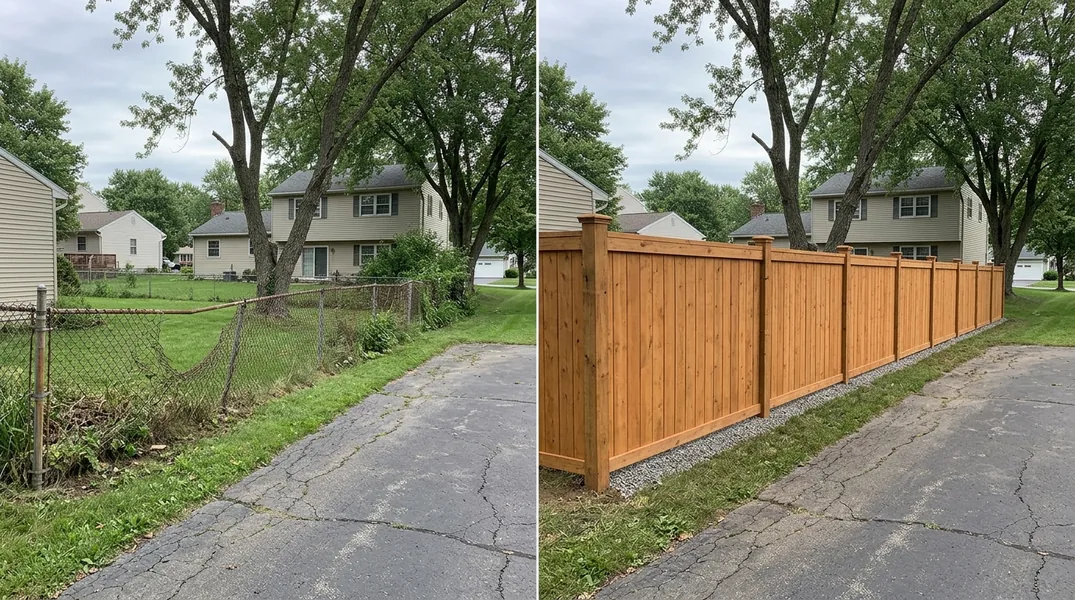
How Long Does a Wood Fence Last in Rochester?
If you own a home in Rochester, you already know that our weather is hard on everything outdoors. Between snowy winters, freeze-thaw cycles, and humid summers, a wood fence takes a beating. So how long does a wood fence last here? In most cases, a well-built and properly maintained wood privacy fence will last 15 to 20 years. Some fences made from rot-resistant species like cedar or pressure-treated pine can stretch closer to 20 years, while others may start showing serious wear at the 10 to 12 year mark.
The key phrase is "properly maintained." A fence that is never sealed, stained, or inspected will age much faster than one that gets a fresh coat of protectant every few years. Posts are usually the first thing to go, because they sit in soil that stays wet and freezes in winter. If the posts rot, the whole fence becomes unstable, no matter how good the boards look. Homeowners in Greece and other nearby suburbs often find that their fence boards are fine but the posts are soft at the base after a decade or so.
Signs You Need a New Fence
Knowing when to replace a fence is just as important as knowing how long it should last. Some problems are cosmetic and can be repaired, but others mean it is time to plan for a replacement. Start by walking your fence line and looking for leaning posts. A post that wobbles when you push on it is usually rotted below ground, and patching it rarely lasts. Next, check for boards that are cracked, splintering, or falling off. A few loose pickets are easy to fix, but widespread damage across multiple sections suggests the fence is near the end of its life.
Other signs you need a new fence include large areas of rot, termite or insect damage, and gates that no longer latch because the whole structure has shifted. Peeling paint and gray, weathered wood are mostly cosmetic, but if the wood feels soft when you press a screwdriver into it, the structural integrity is gone. Finally, if your fence is more than 15 years old and you are facing several repairs at once, replacement is often the smarter investment. A professional inspection can tell you whether a repair will buy you a few more years or whether you should start fresh.
What Shortens a Fence's Lifespan in Rochester
Our local climate is the biggest factor in fence lifespan. Rochester gets heavy snow, ice, and repeated freeze-thaw cycles that push moisture into wood and then expand when it freezes. That cycle cracks boards and loosens posts over time. Summer humidity and spring rain also keep wood damp, which is exactly what rot fungi need to thrive. Fences that sit in shade or near downspouts tend to deteriorate faster because they stay wet longer.
Installation quality matters just as much as the weather. A fence built with posts set too shallow, or without proper gravel drainage at the base, will fail years earlier than one installed correctly. Choosing the right wood species also makes a difference: cedar and pressure-treated pine hold up better than untreated softwoods. Regular maintenance, like sealing the wood every two to three years and keeping vegetation away from the fence line, can add years to its life. If you are unsure whether your current fence was built to last, a professional can assess the posts and framing.
Repair or Replace? Making the Call
When your fence starts showing problems, the first question is whether to repair or replace. Small issues like a few broken pickets, a sagging gate, or minor surface rot can usually be fixed for a reasonable pricing investment. But if the damage involves multiple posts, widespread rot, or a fence that is leaning across several sections, repairs become a temporary fix that costs more over time. A good rule of thumb: if the repair estimate is more than half the cost of a new fence, replacement is usually the better value.
It also helps to think about what you want from your fence. If you are planning to sell your home soon, a new fence can boost curb appeal and privacy. If you simply want to keep the dog in the yard for a few more years, a targeted repair might be enough. Homeowners in Irondequoit and Brighton often ask us to evaluate whether their old wood fence can be saved. In many cases, replacing just the damaged sections is a smart middle ground, but only if the posts and framing are still solid.
Wood & Privacy Fence Installation Near Me: When to Call a Pro
If you have decided it is time for a new fence, professional Wood & Privacy Fence Installation is the best way to make sure the job is done right. A properly installed fence starts with posts set below the frost line, which is critical in our area. A pro will also choose the right materials for your budget and site conditions, whether that is cedar, pressure-treated pine, or another option. If you are considering a low-maintenance alternative, Vinyl & PVC Fence Installation is worth a look, since vinyl fences often last longer in wet climates.
Calling a professional also saves you time and hassle. Installing a fence involves digging, setting posts, and making sure everything is level and secure, which is a lot of work for a weekend DIY project. A local installer knows the soil conditions, permit requirements, and typical weather challenges in the area. If you are ready to get started, contact Rochester Fence at (585) 514-4609 for a free estimate. We can help you decide between repair and replacement, and we will walk you through your options so you can make an informed choice.
Looking for a professional fence contractor in Rochester? Rochester Fence responds fast for all your fence needs.
Get a Free Quote